
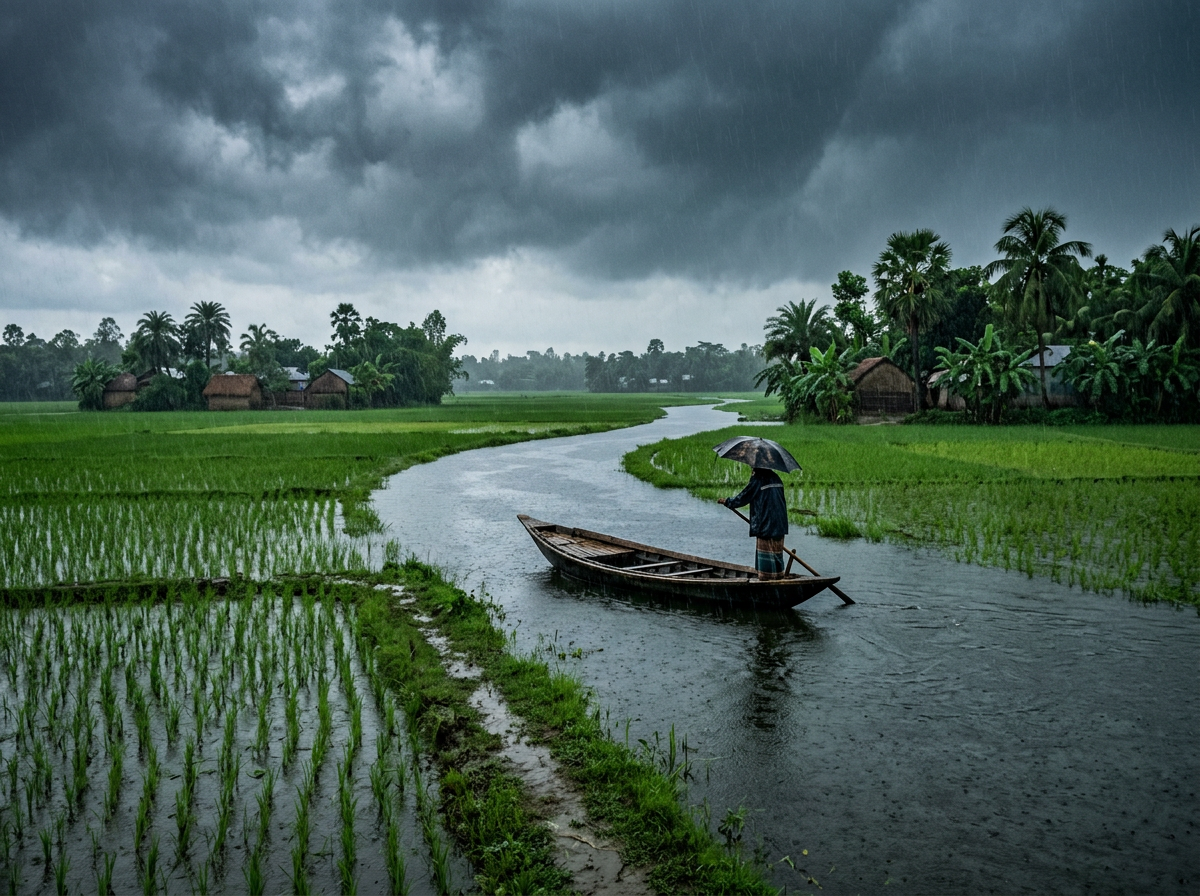
Heavy monsoon rain falling on flooded green paddy fields with a small wooden boat

Travel guide

Everything you need
before you go.

Bangladesh is easier to travel than many people expect, but a little preparation makes a real difference. Here is what we tell travellers before their first visit.

  • Visas and entry
  • Getting around
  • Health, money and etiquette

When to come

Bangladesh keeps
six seasons. Here are four.

Traditionally the country counts six seasons, and each one changes what a journey feels like. For planning purposes, these four windows are the most useful.

Read the travel guide
November – February

Winter

The most comfortable window for travel: cooler days, lower humidity and clearer skies across most of the country.

Good for
Sightseeing, river journeys, the coast and the Sundarbans.
Worth knowing
This is peak season, so popular places are busier and accommodation should be booked early.
March – May

Summer

Hot and humid, with temperatures climbing well above 30°C in many areas. Early mornings and evenings are the best times to be out.

Good for
Mango season in the north, quieter sites and lower prices.
Worth knowing
Heat, humidity and occasional pre-monsoon storms. Plan lighter days and plenty of water.
June – September

Monsoon

Heavy rain turns the country intensely green and fills the rivers and wetlands. Travel is possible but less predictable.

Good for
Landscape photography, tea country and a very green delta.
Worth knowing
Flooding, rough seas, landslide risk on hill roads and disrupted transport. Some coastal and island services stop.
October

Autumn

The rain eases, the air clears and the countryside is still lush. A good shoulder-season month before the peak winter crowds.

Good for
Most of the country, with fewer visitors than midwinter.
Worth knowing
Some years still bring late rain, and cyclone season can extend into this period.

Practical information

Twelve things
worth knowing.

Rules and conditions change, so treat this as a starting point and confirm the details for your own dates and nationality.

Visas and entry

Entry requirements depend on your nationality, so always check the current rules before booking anything.

  • Many visitors need a visa before travelling. Apply through the nearest Bangladesh embassy or high commission.
  • Visa on arrival is available only for certain nationalities and purposes, and the list changes. Do not assume you are eligible.
  • Check the official Department of Immigration and Passports guidance, and confirm your passport has sufficient validity.
  • Keep copies of your passport, visa and itinerary, and carry them with you.

Getting to Bangladesh

Most international travellers arrive at Hazrat Shahjalal International Airport in Dhaka.

  • Dhaka (DAC) is the main gateway, with connections across Asia, the Middle East and beyond.
  • Sylhet (ZYL) and Chattogram (CGP) also handle some international flights.
  • Allow generous time for immigration and traffic when planning onward travel on arrival day.
  • Domestic connections to Cox’s Bazar, Sylhet and Chattogram can save long road journeys.

Getting around

Distances are short on the map but journeys take time. Mixing transport is usually the most comfortable approach.

  • Domestic flights are the fastest way between Dhaka and the coast, Sylhet or Chattogram.
  • Bangladesh Railway runs intercity services on several useful routes, including to the north and southwest.
  • Long-distance buses reach most districts, with a range of comfort levels.
  • Launches and ferries serve the major rivers; country boats are used for shorter crossings.
  • In cities, ride-hailing apps and CNG auto-rickshaws are common. Traffic in Dhaka is heavy.

Money and costs

The currency is the Bangladeshi Taka (BDT). Costs vary widely depending on comfort level and season.

  • Cash is used almost everywhere. Carry smaller notes for markets, boats and rural areas.
  • Cards are accepted at larger hotels, restaurants and shops in Dhaka and Chattogram.
  • ATMs are common in cities and larger towns, but less reliable in remote areas.
  • Agree prices for boats, rickshaws and guides in advance where no meter or fixed rate exists.

Health and water

Speak to a travel health professional before you go, ideally several weeks in advance.

  • Discuss routine vaccinations plus hepatitis A and typhoid, and any others recommended for your itinerary.
  • Malaria precautions may be advised for forest and hill areas. Follow professional medical advice.
  • Drink bottled or properly filtered water, and be cautious with ice and raw food from street vendors.
  • Use mosquito repellent, especially around dawn and dusk, and pack rehydration salts.
  • Medical facilities are best in Dhaka and larger cities. Comprehensive travel insurance is strongly recommended.

Staying connected

Mobile coverage is good in most populated areas, and improving in remote ones.

  • Local SIM cards are available from major operators and require passport registration.
  • Mobile data is widely used and generally affordable; coverage is weaker in forests and hills.
  • Wi-Fi is standard in city hotels and many cafés, but not in rural accommodation.
  • The country code is +880 and the time zone is UTC+6.

Culture and etiquette

Bangladesh is a conservative, hospitable country. A little awareness goes a long way.

  • Dress modestly, particularly outside cities and at religious sites. Shoulders and knees covered is a good baseline.
  • Remove your shoes before entering mosques, temples and many homes.
  • Ask before photographing people, and respect a refusal.
  • Use your right hand for eating and for giving or receiving things.
  • Friday is the weekly holiday alongside Saturday, and many businesses close. During Ramadan, avoid eating and drinking in public during daylight hours.

Safety and permits

Bangladesh is generally a welcoming place to travel, but some areas need extra planning.

  • Check your government’s current travel advice before booking and again before departure.
  • Permits may be required for foreign visitors in parts of the Chittagong Hill Tracts, and rules change.
  • Sundarbans access requires permits, forest fees and approved boat arrangements.
  • Some coastal areas near the far southeast have access restrictions. Confirm current rules.
  • Avoid large political gatherings, keep valuables discreet and register with your embassy if that is your practice.

What to pack

Light, breathable clothing works for most of the year, with a few additions for the seasons.

  • Lightweight, modest clothing, plus a light layer for air-conditioned transport.
  • A rain shell or compact umbrella, especially from June to September.
  • Sun protection: hat, sunglasses and high-factor sunscreen.
  • Mosquito repellent, rehydration salts and any personal medication with its prescription.
  • A power adapter for type C, D, G or K plugs. Electricity is 220V at 50Hz.
  • Comfortable walking shoes and a small day bag for boat and market days.

Food and drink

Rice, fish, lentils and spice form the backbone of Bangladeshi cooking, with regional variations.

  • Try kacchi biryani, hilsa in season, pitha in winter and the sweets that Dhaka is known for.
  • Vegetarian options are widely available, though they may need to be requested.
  • Tea is the everyday drink, usually served sweet and milky.
  • If you have allergies or dietary requirements, tell us in advance so stops can be planned around them.

Language basics

Bangla is the national language. English is widely understood in cities and in tourism.

  • Assalamu alaikum — a common greeting.
  • Dhonnobad — thank you.
  • Kemon achen? — how are you?
  • Hae / Na — yes / no.
  • Koto? — how much?
  • Pani — water.
  • Maaf korben — excuse me or sorry.

Travelling responsibly

Tourism is still developing in Bangladesh, which means your choices have a visible effect.

  • Travel with local guides and use local boats, drivers and family-run places to stay where you can.
  • Take your rubbish out of forests, rivers and beaches, and avoid single-use plastic where possible.
  • Ask before photographing people, and be thoughtful about images of children and of communities.
  • Respect wildlife: keep your distance, stay quiet and never encourage animals to be handled.
  • Be mindful of water and energy use, especially in areas where supply is limited.

Questions

Answers to the
things people ask.

If your question is not here, ask us directly. We would rather answer it before you book than after.

When is a good time to visit Bangladesh?

November to February generally brings cooler, drier weather for sightseeing. Tea country is especially green during the wetter months. Conditions vary by region, so match your dates to the places you want to explore.

Can a journey be tailored to me?

Use the journeys on this site as a starting point. Discuss your interests, preferred pace, dates and transport needs with PODRURZE to agree a suitable itinerary, subject to availability.

Do I need a visa?

Visa requirements depend on your nationality and circumstances. Check with a Bangladesh embassy or the official immigration authority before making travel commitments, and do not assume visa-on-arrival eligibility.

Are these trips available to book online?

The itineraries shown are inspiration, not live bookable packages. Dates, inclusions and prices need to be agreed directly with the company. Online booking is not enabled on this website.

How long should I allow for a first visit?

A week is enough for the capital plus one region. Ten days to two weeks allows you to combine two or three areas, such as the coast, the rivers and the hills, without spending too much time in transit.

Is Bangladesh suitable for solo travellers?

Many people travel here independently. Travelling with a local guide or driver is often more comfortable for first visits, particularly outside the main cities, and it makes language and logistics much easier.

Can you arrange family trips?

Yes. Family journeys usually work best with shorter travel days, comfortable transport and a mix of nature, boats and heritage. Tell us the ages of the travellers so the pace can be planned around them.

What about food and water?

Bangladeshi food is varied and can be adapted. Vegetarian and other dietary requirements can usually be accommodated if we know in advance. Drink bottled or filtered water and be cautious with ice and raw food from street vendors.

Do some areas need permits?

Parts of the Chittagong Hill Tracts may require permits for foreign visitors, and the Sundarbans requires permits and forest arrangements. Rules change, so confirm current requirements well before you travel.

How do payments and confirmations work?

Payment methods, deposits and cancellation terms are agreed directly with PODRURZE LTD when an itinerary is confirmed. Nothing on this website constitutes a confirmed booking.

The best journeys start with hello

Still have
a question?

Send it our way. We are happy to talk through routes, timing and what is realistic for your trip.

Get in touch